
Visa delays driving AI talent away
UCL's research chief on visas, King's X, Nvidia

Good morning and a very happy last day of the holidays. I'm truly chocolate-d out.
Sky-high energy costs, little compute and a lack of funding — the UK doesn’t have the ingredients to develop its own LLMs right now, but London startup Locai Labs has found an ingenious way to repurpose the best open source models into a UK sovereign LLM. Meet GB1 — it doesn’t train on your conversations, uses licensed data, and is powered by renewable energy. UK fusion pioneers First Light are among the organisations already using it and there’s much more to come.
🚨 🚨 Get another 30 days free: To keep reading the whole of your favourite niche newsletter from Monday you'll need two secs (and a credit card) to upgrade to a paid membership. You get another 30 days free if you sign up by this Monday. After that date, new paid subscribers get seven days free. It costs less than a quid a day, you know it makes sense. 🚨 🚨
News In Brief 🩳
Reasons to worry: The news about OpenAI pausing its "Stargate UK" plan until the "right conditions" are met on energy and copyright regulation, makes bad headlines for the government, but there are even bigger headaches on the infrastructure buildout. The OpenAI project, in partnership with Nscale, was vague and relatively small, with its 8,000 GPUs a fraction of the 120,000 Nvidia claimed last September would be coming to the UK. The bigger worry should be about the rest of those GPUs, largely dependent on bigger schemes, like Nscale's Loughton data centre, whose construction has been pushed back.
Data centres please: More people support than oppose building new data centres, but there is plenty of nuance to the public's views. When asked if they'd back a data centre in their local area, opposition rose, polling out today from Public First shows, but still remained net positive. The argument that cut through the most was storing data in the UK, with 70 percent supportive, even if it meant building more data centres.
Thanks for letting me know: Reform MP Danny Kruger has written to cabinet office boss Darren Jones about the hacking capabilities of Anthropic's Claude Mythos model, describing the consequences of it as "extremely serious". But it was all smiles at No.10 yesterday with the prime minister's AI adviser Jade Leung hosting a get-together of engineers.
Who needs 'em? A third of UK adults believe driverless cars bring no benefits, but there is a strong generational divide, a survey for the Institute for Driverless Transport shows. Among 18-34 year olds, the number saying there were no benefits to driverless vehicles fell to 18 percent, while among those 65 and over it was half.
Social blaming: Social media platforms are contributing to a less social online experience by prioritising influencers, adverts and brands, according to a report from the IPPR think-tank out today. Their analysis found that among the top four posts in users’ feeds, only 18 per cent come from someone they know. The report argues this fragments society and politics. Meanwhile, London mayor Sadiq Khan has also blamed platforms for failing to tackle disinfo about the city being a crime-ridden hell hole.
Coming to a bus stop near you: The University of Sheffield has launched a campaign on bus stops and social media to raise AI awareness among the public. They're placing digital comics on bus stops across Sheffield, Plymouth, Morecambe and Lancaster for the Let's Talk AI campaign.
'We're losing people to Boston because of visa friction'
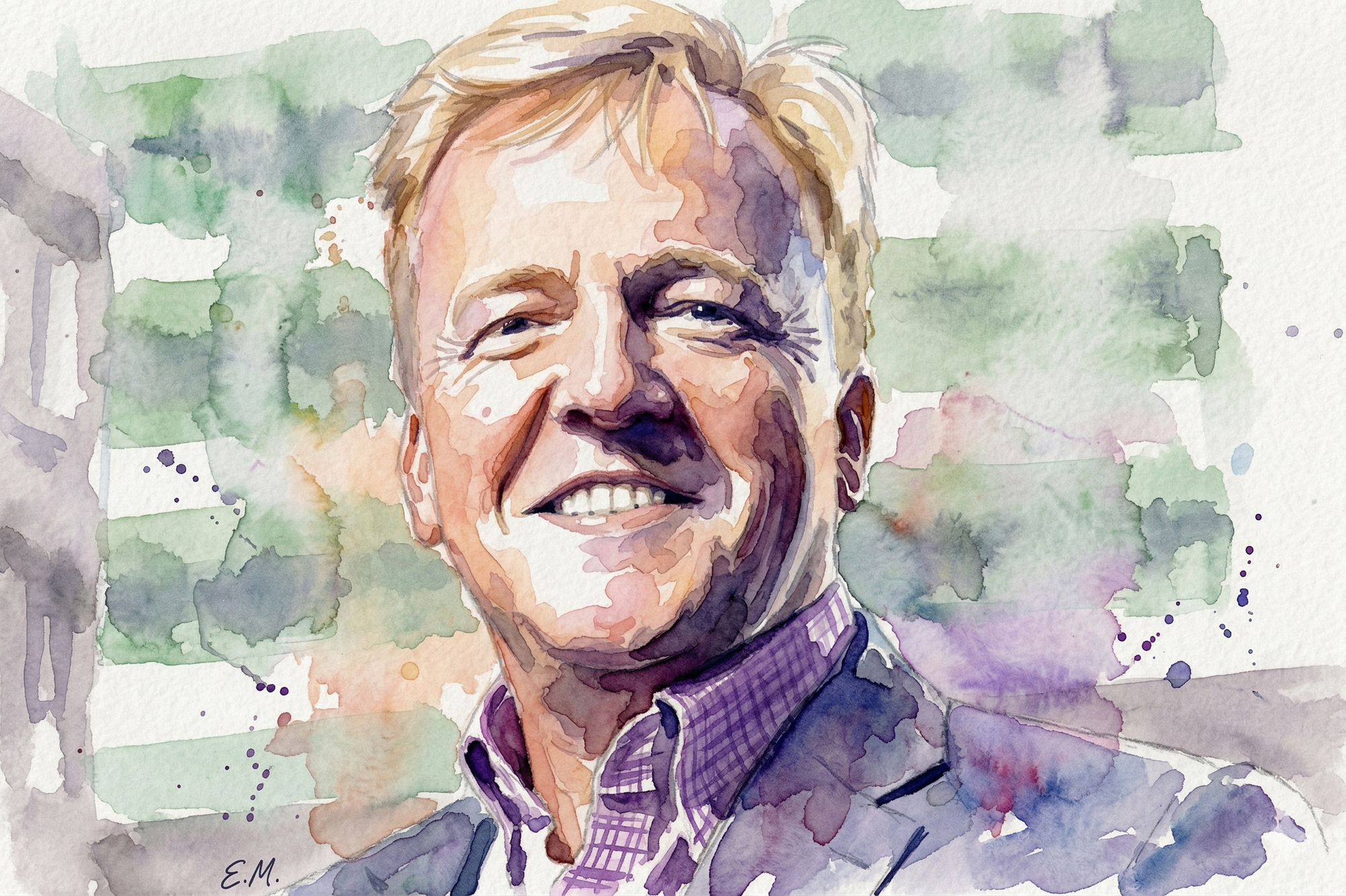
Geraint Rees is University College London's Vice Provost for Research, Innovation & Global Engagement. He has held senior roles across UCL, has advised Google DeepMind and is a non-exec director at the university's spinout arm.
1) What role do you see universities playing in innovation areas like King's Cross?
Google DeepMind, the Francis Crick Institute and Isomorphic Labs are not in King’s Cross by accident. They are here because UCL is here, and because proximity to world-class research and talent is worth more than cheaper real estate elsewhere.
But the role has evolved. UCL is no longer just a knowledge producer but is now a generator of high-growth companies. Autolus, our CAR-T therapy spinout, has raised $1.1 billion, employs 450 people and manufactures in the UK. AI company Synthesia, co-founded by a UCL professor, is valued at $4 billion. That happened because we built the infrastructure and expertise that turns research into companies including UCL Business, our commercialisation company, and clinical trial access.
2) What government policy changes do you most want to see?
I would like to see three changes, none of which requires significant spending.
First, capital allowances that treat lab fit-out as infrastructure. The AI-driven drug discovery companies that define this district still need wet labs and clean rooms for experimental validation, and those cost three to five times standard office conversion. Developers can't finance that speculatively, so early-stage companies can't find affordable space, and the pipeline from AI research to clinical application breaks down.
Second, specialist researcher visas processed in weeks, not months. The district draws AI and life sciences talent from over 100 countries. Every early-stage company we speak to raises visa processing times and costs as a deterrent. We are losing people to Boston and Singapore not because of pay but because of friction.
Third, NHS procurement used as a demand anchor for AI-developed products. NHS London has enormous purchasing power. Directing more of it toward UK-developed AI tools and therapies would do more for the sector than almost any other single lever. The government is the UK's biggest buyer, so should act like it.
3) What do you tell students who might be worried about AI changing the future of work or wider society?
I tell them that anxiety about AI is rational and their generation is right to take it seriously. But I also tell them something that the data supports: the skills that AI amplifies rather than replaces are precisely the skills a research university like UCL develops. The ability to ask a question that hasn’t been asked before, working across disciplines and exercising judgment when the answer isn’t in the training data.
The students I worry about are not those asking whether AI will take their jobs. They are the ones who assume that because AI can generate an answer, they no longer need to understand the question. Curiosity and critical thinking are not threatened by AI, but are the hedge against it.
4) UCL signed a partnership with Nvidia last year. Which areas have you seen the most development in since then?
The partnership has moved faster than I expected in two areas. Firstly, sovereign AI — the UK’s capacity to train and deploy advanced models on its own data, in its own languages, including Welsh, Gaelic and Cornish. That matters culturally and practically: a model trained on NHS data or UK legal frameworks or UK languages behaves differently from one shaped by US data and literature.
Secondly, the application side. We have active projects using Nvidia’s platforms to build digital twins for stroke prediction and treatment — the kind of tool I expect to see deployed in the NHS within years, not decades.
5) Give us a piece of advice you’d tell your teenage self.
Enjoy yourself a little more and worry a little less. Advice my non-teenage self still needs!
Happy weekend, back Monday.
Tom