Two great industries, one endless battle
The AI-Copyright debate is stuck

Good morning and happy International Women's Day (for Sunday). Wishing you all restful weekends. I'll mainly be putting up a Wendy House.
Happening Today 🗓️
In Manchester: Connected by Data hosts a conference on "power and participation in public tech".
Next week in Parliament: On Tuesday, Labour MP Chi Onwurah leads a Westminster Hall debate on UK tech sovereignty. The Lords Science and Technology Committee also takes evidence on AI's use in medicine. On Wednesday, the Science, Innovation and Technology Committee interviews experts for and against social media and chatbot curbs on teenagers.
Full updated calendar here. Please email me with any events you'd like including.
News In Brief 🩳
Build it: The Tony Blair Institute has built on a call from OpenUK which we featured in yesterday's newsletter for a National Open Source AI Lab. The lab should develop open source tools for public services and be built on the government's existing Incubator for AI, it says.
Culture shift: University College London's commercialisation arm, UCL Business, publishes figures on spinouts today, showing a leap in the number of academics seeking to commercialise their research.
The AI-Copyright debate is stuck
In 12 days time the government will publish an update on where it wants to go next in the AI-Copyright debate. Ministers wanted to find a "landing zone" between tech company and creative sector interests, but expectations of progress are low and there is not even agreement in government on a way forward, according to two industry representatives.
Not helping: The creative industries and tech companies have been fighting a lobbying battle for years around changing, or not, UK copyright law to train AI models. The latest missed opportunity to find a way forward is a report by the House of Lords Communications and Digital Committee out this morning which largely takes the creative industries' side.
More delays: On March 18 there will be a government report and economic assessment which is meant to outline a way forward. But two industry reps played down the chances of a breakthrough. One creative industry rep described a “battle” between the tech department (DSIT) and the culture dept (DCMS) over what to do next.
Crying emoji: The saddest thing about the AI-Copyright debate is that it pits two of Britain's great strengths - the creative and tech industries against one another. The Lords' report today falls exactly into this trap, comparing the AI industry unfavourably to the creative one.
AI? No biggie: It warns that ministers would "sacrifice" the creative industries by accepting tech company demands for copyright reform. It dismisses AI as "jam tomorrow" and "speculative", playing down its contribution to the UK economy at "just" £12bn (and 86,000 jobs).
Narrow group: Evidence to peers on the committee was largely given by the creative sector. The committee said this was due to short timescales, but the recommendations reinforce existing positions of the creative sector rather than helping the stalemate. They include ruling out a text and data mining exception for commercial research, something the government is looking at according to three industry reps, but which the creative sector is firmly against.
Ring the alarm: Committee Chair Baroness Keeley said: “Watering down the protections in our existing copyright regime to lure the biggest US tech companies is a race to the bottom that does not serve UK interests."
I'm sorry but: It is also not in the UK interest for the two sides to continue taking chunks out of each other. If the Lords want to play a role, they should help by suggesting potential landing zones, rather than repeating lines from one side of the debate.
‘AI policy should focus on economic resilience’
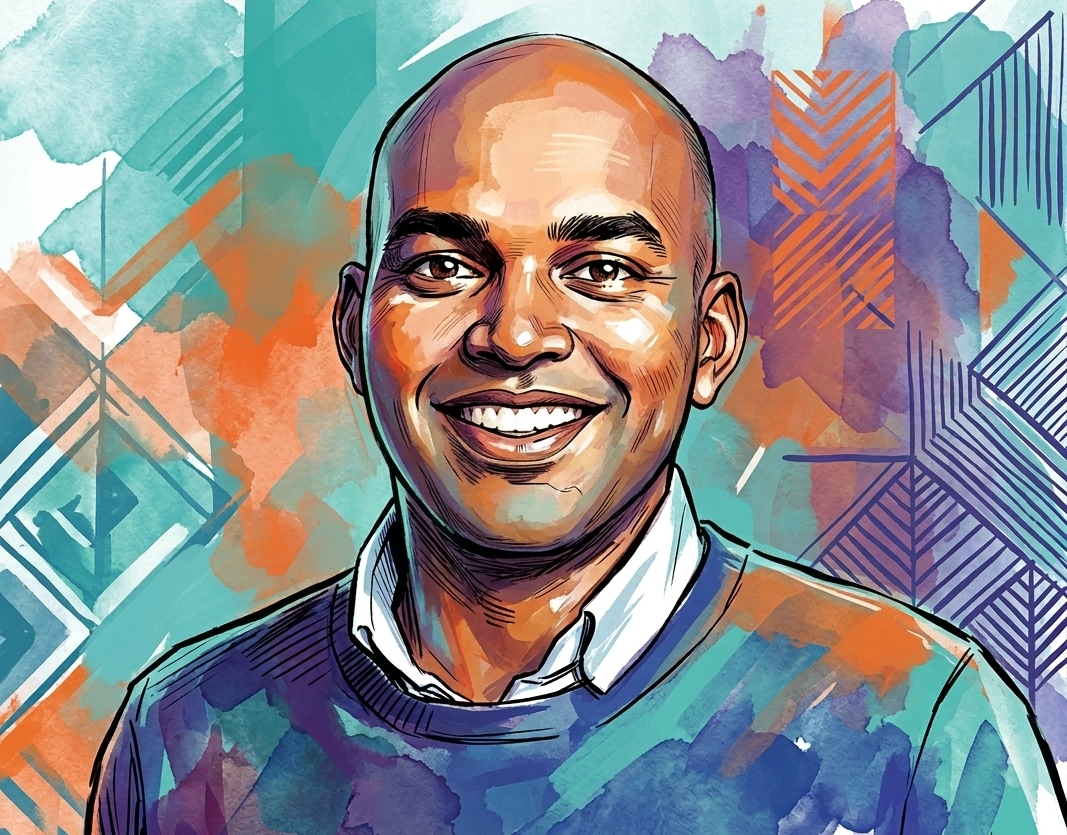
I’m running a Q&A with industry, political and policy leaders on AI every Friday. First up is Jambu Palaniappan, CEO of Checkatrade who has a front row seat on AI's impact on work. He is also a non-executive director at Monzo and Just Eat. He studied Public Policy and Economics at Vanderbilt University.
1) Trades should be among the areas least affected by AI. Where are you seeing an impact?
Trades will always be hands-on, but the business of being a trade is being transformed by AI. It helps trades win more work, better communicate with customers, price more accurately and run more efficient businesses. AI reduces friction on both sides of the marketplace.
2) Are you seeing any signs of more white-collar workers switching to a trade?
In a world where we need more housing and the mass decarbonisation of homes, there is huge unmet demand for more trades. The combination of that context and AI-driven disruption of ‘white-collar’ work means we are seeing growing interest in trades as a stable, resilient career path.
AI is likely to automate or reshape many desk roles before any potential impact on physical, skilled labour in the years ahead. That dynamic is changing perceptions.
3) Which policies do you think the government should adopt most urgently to prepare the country for AI-led disruption?
First, investment in digital skills, not just coding, but AI literacy across all sectors, including SMEs and sole traders. Second, a serious push on vocational training and apprenticeships. If AI accelerates disruption in office-based roles, we must expand pathways into skilled trades and technical professions.
AI policy shouldn’t just focus on frontier models. It should focus on economic resilience.
4) Where do you think the UK is most prepared to deal with AI disruption?
The UK has three advantages that must be protected and catalysed: a strong AI research ecosystem, a vibrant start-up culture and a flexible labour market. Yet an unheralded strength is our small business economy. If we equip SMEs and trades with the right tools, they can adapt quickly.
5) Give us a piece of advice you would tell your teenage self
Learn how to learn. The tools will change faster than ever, but curiosity, adaptability and resilience compound over time. I may lead a British tech success story but at heart I remain a son of Silicon Valley - and something I believe the UK should adopt from that culture is that the future will reward people who embrace change rather than fear it.
Thanks for supporting this newsletter in its first week. I'm very open to ideas and suggestions so do email me (just not over the weekend). Back Monday.
Tom