
MPs want action on deepfakes
But the market needs encouragement.

Happy Friday, I'm off to north Norfolk but will be publishing next week as normal apart from the bank holiday. It's been a crazy three months so I do hope you get some down time.
🎧 New feature alert: You can now listen to The Morning Intelligence by clicking on the audio below (thanks ElevenLabs). "Sam" even sounds a bit like me. If you're reading on email, it will open in your browser.
News In Brief 🩳
Reviewing it: The CMA announced investigations into five businesses this morning as part of a crackdown on fake and misleading online reviews. They are Autotrader, Feefo, Dignity, Just Eat and Pasta Evangelists.
This is our moment: Online safety campaigners are viewing two landmark US court rulings as Big Tech's "Big Tobacco moment". The Molly Rose Foundation has started a petition calling for a new Online Safety Act. The EU, meanwhile, has opened an investigation into Snapchat over child safety concerns.
An hour, max: Screen time for under-5s should be limited to an hour a day, while toddlers and babies should avoid screens altogether, according to government guidance published this morning. Children should watch with an adult and avoid fast-paced videos, it adds.
At a loss: Taxpayers are losing tens of billions to fraud as public bodies are failing to use the technology to fight it, MPs on the Public Accounts Committee find in a report published this morning. It warns legacy tech, a lack of digital leadership and a failure to use data analytics means the government target of saving £6 billion a year from fraud detection is off.
You can't do that: A US judge has temporarily blocked the Pentagon's blacklisting of Anthropic.
Deeply faked
The UK's deepfake detection market needs regulatory clarity and access to training data if it's going to live up to its promise, a DSIT commissioned report recommends.
Waiting it out: Despite the political focus on deepfakes, the safety tech industry thinks a lack of clarity around the Online Safety Act's application to deepfakes means platforms are taking a ‘wait and see’ approach, thus dampening the market for AI detection tools.
Alignment: The report, from PUBLIC, finds the UK has the second largest deepfake detection industry in the world. With so much political focus on what to do about online disinfo and deepfakes, a government leg up could help both the industry and political aims, but go too far with policies, as Synthesia's Alexandru Voica warns, and you risk harming consensual digital replicas.
Need you now: MPs on the Foreign Affairs Committee are the latest to sound the alarm, describing the UK as a “sitting duck” for online disinfo ops by hostile states. In a report out this morning, they call for personality rights to protect against deepfakes, social media companies to make some algorithms public and for the government to create a “National Counter Disinformation Centre”.
Do this: The committee also says the FCDO needs to apply lessons it's learned from combatting Russian disinfo in eastern Europe to the UK. Cash from the 5 percent uplift in defence spending should be used to tackle disinfo, they recommend.
We're at war: The report analyses the disinfo threats by Russia, China and Iran, as well as non-state groups like the Wagner Group and Daesh. It describes the scale of Russian activity across the West as "a state of war", but argues the government is not being upfront with the public about it.
Come clean: “The government hasn’t communicated the scale and depth of the threat that disinfo poses to the public. We need a bit less caution and a bit more candour," committee chair Emily Thornberry said. “As we head into the local elections, the UK must apply the lessons we learn overseas and be willing to act to protect the truth in this country.”
No shortage of ideas: The MPs' report comes as a review into foreign interference into UK politics, the Rycroft Review, this week recommended a ban on crypto donations, tightening the regulation of online political advertising and the introduction of investigatory powers for the Electoral Commission.
Working on it: Some of these suggestions are covered by Labour MP Emily Darlington's amendments to the Representation of the People Bill, which secretary of state Steve Reed said Wednesday the government will look at.
'We're leaving talent on the table'
Carolyn Dawson is CEO of Tech Nation and Founders Forum Group, a global community of entrepreneurs. She has led London Tech Week for the last eight years and is a key figure on the UK startup scene.
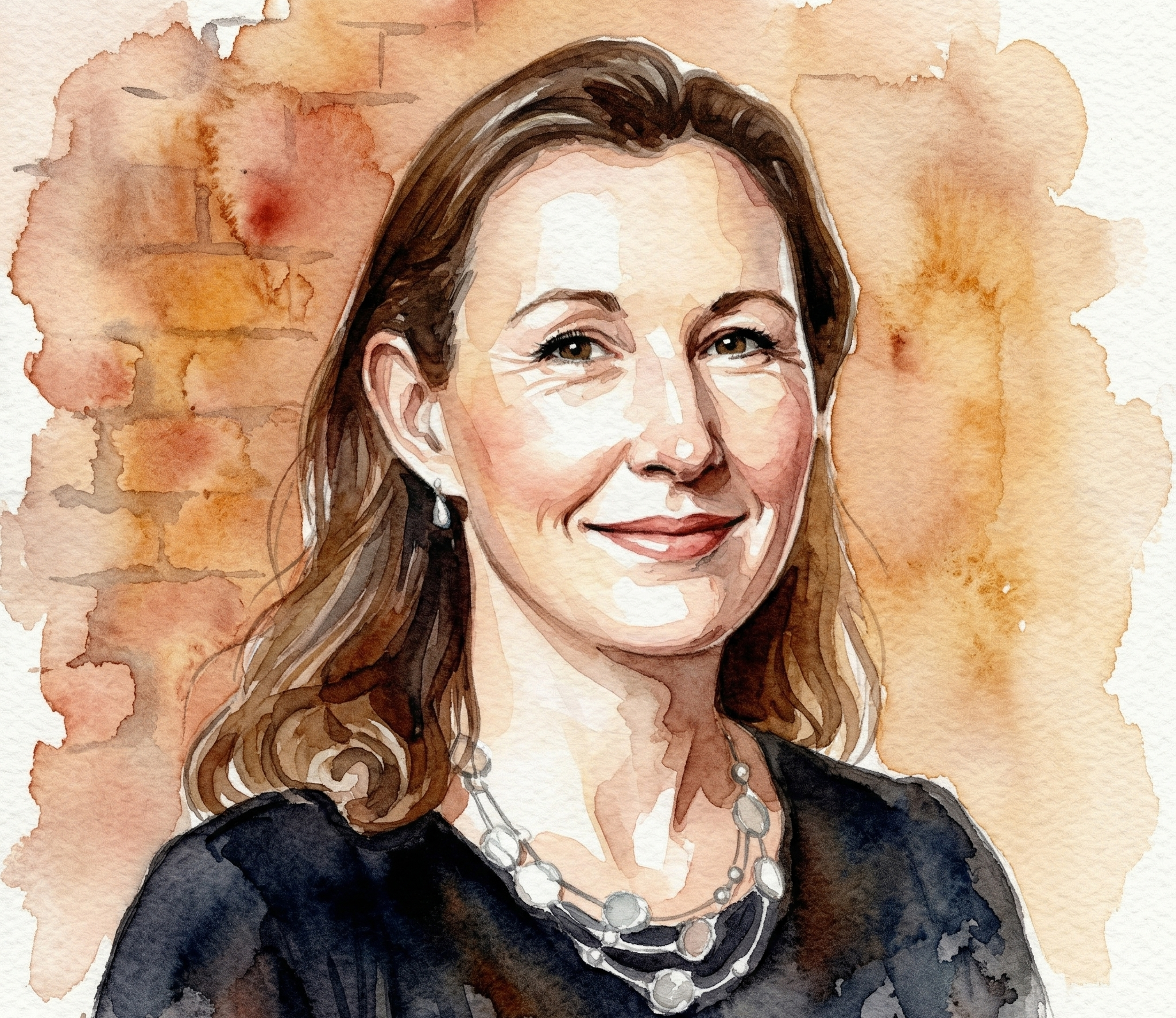
There has been a flurry of tech policy announcements since the start of the year. Which do you welcome most and where do you think the government needs to go further?
It’s been fantastic to see the level of engagement and ambition from the government on tech and AI. We had an event at Downing Street with the Chancellor last week, and I could tell that she shared our frustrations with, for example, the challenges that scale-ups face in attracting talent and accessing capital. Reforms like the expansion of the EMI scheme are already having a positive impact.
Two areas where I'd push for more: First, supporting the people who've already built and exited a company and want to do it again. Right now, the tax and incentive structures don't support them.
Second is government procurement. The government is the UK's biggest buyer. If it committed to procuring AI technologies from British companies at scale, that would do more for the sector than almost any other single intervention.
You work with founders across the globe. How do they view London and the UK?
London's position is definitely strengthening after what, frankly, has been a difficult spell. The UK combines access to capital, world-class talent, stability, and a government that is genuinely trying to be pro-innovation.
But we can't be complacent and, while things are improving, it is still sluggish. We recently surveyed founders and found that a third of them are considering relocating outside the UK, primarily to the US, and primarily for access to capital and talent. Fixing these issues is a long-term project which is why it’s so important to start now.
You've been a senior leader in the industry for over 15 years. What changes, good and bad, have you seen regarding widening access to opportunity in tech?
When I started in tech, the conversation about diverse founders barely existed at an institutional level. Now it's part of how serious investors and programmes think about deal flow. At Tech Nation we've built specific programmes that support founders from traditionally under-represented backgrounds. On gender diversity, we’re seeing more women founders in deep tech, more girls taking STEM A-levels and AI adoption by women now exceeding men for work-life management.
But the funding gap for women and ethnic minority founders is still stark. And geographic disparity is a huge issue too: we're leaving enormous talent and potential on the table in the North, the Midlands, in Wales and Scotland.
What should we expect from London Tech Week this year?
The agenda this year spans AI at scale, deep tech, frontier science, enterprise transformation and the policies shaping Europe's technological future. I think there will be a lot of interesting discussion and debate on sovereign AI. That's both a geopolitical question, but also something that’s deeply practical for every founder.
Give us a piece of advice you would tell your teenage self.
Care less about what people think. Go bigger. Go bolder. Push past the edge of what feels comfortable, because on the other side of that fear is the version of you that you actually want to be. The world doesn't need the quieter, smaller version of you. It needs the real one.
Enjoy the weekend, back Monday.
Tom